
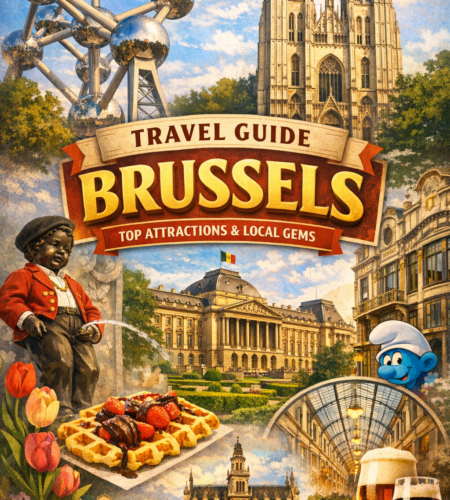

Brussels is one of those cities that reveals itself in layers. At first, it feels like a compact capital of grand squares, famous landmarks, waffles, and comic-book charm. Then the city opens up into elegant museum quarters, Art Nouveau houses, major parks, beer culture, antique districts, neighborhood walks, and surprisingly calm green escapes. This Travel Guide Brussels follows your Brussels attraction list in the same order, so it reads like a real visitor route rather than a random collection of places. It balances icons, culture, food areas, and slower local corners — which is exactly how Brussels works best for tourists.
1) Grand-Place
Grand-Place is the emotional and visual center of Brussels. It is the kind of square that immediately makes the city feel important: ornate guildhalls, historic facades, event energy, and one of the strongest first impressions anywhere in Europe. It works as both a landmark and a starting point, because so many central sights connect naturally from here.
📍 Address: Grand-Place, 1000 Brussels, Belgium
🚇 Public Transport: Gare Centrale / De Brouckère + walk
💶 Price: Free
✅ Best For: first-time visitors, iconic photos, evening atmosphere
💡 Tourist Tip: go once early and once after dark — the mood is completely different.
2) Atomium
The Atomium is Brussels at its most iconic and futuristic. Even if you know the image already, seeing it in person feels different because of the scale, the unusual structure, and the way it stands apart from the historic center. It is one of the city’s best landmark visits when you want a “headline attraction” rather than just a quick photo stop.
📍 Address: Atomium Square, 1020 Brussels, Belgium
🚇 Public Transport: Heysel / Heizel (Line 6) + walk
💶 Price: Paid
✅ Best For: panoramic views, families, major Brussels icons
💡 Tourist Tip: pair it with Mini-Europe and make the whole Heysel area a half-day plan.
3) Manneken-Pis
Manneken-Pis is tiny, but that is exactly part of the joke and the charm. The stop works best when treated as a quick folklore moment rather than a major standalone attraction. It is one of Brussels’ classic “you have to see it once” places, especially because it fits so easily into a Grand-Place walking loop.
📍 Address: Rue de l’Étuve / Stoofstraat, central Brussels
🚇 Public Transport: Gare Centrale + walk
💶 Price: Free
✅ Best For: quick city-center stop, quirky Brussels folklore
💡 Tourist Tip: check whether the statue is wearing a costume that day.
4) Parlamentarium
Parlamentarium gives Brussels a completely different identity from the postcard center. Instead of guildhalls and chocolate shops, you get the modern EU side of the city: interactive exhibits, multilingual content, and a fuller understanding of Brussels as a political capital. It is one of the smartest rainy-day attractions in the city.
📍 Address: European Quarter, Brussels
🚇 Public Transport: Schuman / Maelbeek
💶 Price: Free
✅ Best For: EU district visits, rainy days, longer museum-style stops
💡 Tourist Tip: allow about 90 minutes if you want the experience to feel complete.
5) Magritte Museum
The Magritte Museum is one of Brussels’ strongest cultural stops because it feels specific, refined, and unmistakably Belgian. It is not just a generic art museum visit — it gives you a focused look at surrealism in a setting that works especially well for travelers who want one major art stop in the city.
📍 Address: Royal Quarter, central Brussels
🚇 Public Transport: Gare Centrale + walk
💶 Price: Paid
✅ Best For: art lovers, first-time museum visitors in Brussels
💡 Tourist Tip: pair it with Mont des Arts and nearby museums for a strong culture day.
6) Comic Art Museum
This is one of the most “Brussels” museums in spirit: playful, visual, and tied to Belgium’s comic-book identity. It is also one of those places where the building matters almost as much as the collection, which makes the visit feel richer than a simple niche museum stop.
📍 Address: Central Brussels
🚇 Public Transport: central metro/train area + walk
💶 Price: Paid
✅ Best For: Tintin fans, families, indoor activity
💡 Tourist Tip: leave time for the museum shop and then continue looking for comic murals around the city.
7) Cinquantenaire Park
Cinquantenaire is where Brussels starts to feel broader and more spacious. The giant arch, museum cluster, and open green space make it one of the city’s best places to slow the pace a little. It works well because you can treat it as a park visit, a viewpoint stop, a museum afternoon, or all three together.
📍 Address: Parc du Cinquantenaire, Brussels
🚇 Public Transport: Mérode / Schuman
💶 Price: Park free; museums paid
✅ Best For: mixed sightseeing days, museum clusters, picnics
💡 Tourist Tip: choose one museum instead of trying to do everything at once.
8) Mini-Europe
Mini-Europe is one of Brussels’ easiest family-friendly attractions. It works best when you want something more visual and playful than a standard museum, and it fits naturally with Atomium because both are in the Heysel area.
📍 Address: Heysel area, Brussels
🚇 Public Transport: Heysel / Heizel
💶 Price: Paid
✅ Best For: families, outdoor sightseeing, combo with Atomium
💡 Tourist Tip: go earlier in the day, especially in warmer months.
9) Royal Palace
The Royal Palace has a different role from many Brussels attractions: even when you do not go inside, it still matters as part of the city’s ceremonial image. It works especially well in combination with Brussels Park and the museum-rich Royal Quarter.
📍 Address: Royal Quarter, Brussels
🚇 Public Transport: Parc / Arts-Loi area
💶 Price: Seasonal opening; exterior free
✅ Best For: architecture, Royal Quarter walks, seasonal visits
💡 Tourist Tip: even if it is closed, it is still worth the stop for the setting and photos.
10) Galeries Royales Saint-Hubert
These galleries make Brussels feel elegant in a very easy, low-effort way. They are perfect when you want architecture, a protected indoor stroll, chocolate-shop atmosphere, and a polished break between bigger attractions.
📍 Address: Near Grand-Place, central Brussels
🚇 Public Transport: Gare Centrale + walk
💶 Price: Free
✅ Best For: rainy weather, evening strolls, chocolate and café stops
💡 Tourist Tip: one of the best short Brussels stops when the weather turns bad.
11) Brussels City Museum (Maison du Roi)
This museum is especially useful because it adds meaning to Grand-Place instead of pulling you away from it. It is the sort of stop that makes the square outside feel richer, with folklore, city history, and Manneken-Pis connections all in one central place.
📍 Address: Grand-Place, Brussels
🚇 Public Transport: Gare Centrale + walk
💶 Price: Paid
✅ Best For: city history, weather-safe sightseeing, Grand-Place context
💡 Tourist Tip: do it right after Grand-Place while the square is still fresh in your mind.
12) St. Michael & St. Gudula Cathedral
This cathedral gives Brussels one of its strongest calm, vertical moments. It is a very good stop between busier attractions because the building feels weighty and historic without demanding a huge amount of time.
📍 Address: Central Brussels
🚇 Public Transport: Gare Centrale / Parc
💶 Price: Usually free, donations welcome
✅ Best For: Gothic architecture, stained glass, quiet city-center pause
💡 Tourist Tip: morning light is especially good here.
13) Mont des Arts Garden
Mont des Arts is one of Brussels’ smartest “connector” stops. It works as a viewpoint, a resting place, and a natural walking link between the Royal Quarter and the lower center. On a short trip, it gives a lot of reward for very little effort.
📍 Address: Mont des Arts, central Brussels
🚇 Public Transport: Gare Centrale + walk
💶 Price: Free
✅ Best For: skyline photos, short scenic stop, museum-quarter routes
💡 Tourist Tip: sunset is the classic time, but even a quick daytime stop is worth it.
14) MIM – Musical Instruments Museum
MIM is one of the most distinctive museum visits in Brussels because it combines a remarkable Art Nouveau building with a collection that feels more immersive than many travelers expect. It works especially well for people who want culture without the heaviness of a more traditional fine-arts museum.
📍 Address: Royal Quarter / Mont des Arts area
🚇 Public Transport: Gare Centrale + walk
💶 Price: Paid
✅ Best For: rainy days, music lovers, design and architecture fans
💡 Tourist Tip: the audio-based experience is a big part of why the museum works so well.
15) Royal Museums of Fine Arts of Belgium
This is one of Brussels’ major culture anchors. The complex is strong precisely because it is broad: Old Masters, modern works, and multiple museum experiences all clustered in a way that can fill a real half-day or more.
📍 Address: Royal Quarter, Brussels
🚇 Public Transport: Gare Centrale + walk
💶 Price: Paid
✅ Best For: art-focused travelers, museum days, deeper cultural itineraries
💡 Tourist Tip: choose a focus before you go so the visit does not feel too dense.
16) BOZAR
BOZAR is one of the most flexible cultural venues in Brussels. It can be a quick gallery stop, an evening performance venue, or part of a wider arts-focused day around Mont des Arts. That flexibility is what makes it so useful for travelers.
📍 Address: Near Gare Centrale / Mont des Arts
🚇 Public Transport: Gare Centrale
💶 Price: Paid entry varies by exhibition or event
✅ Best For: evening culture, rotating exhibitions, rainy-day plans
💡 Tourist Tip: always check the calendar before visiting — the program changes constantly.
17) Coudenberg Palace
Coudenberg gives Brussels a more hidden, archaeological side. It is a strong choice for visitors who like the feeling of discovering the city underneath the city, especially in contrast to the polished facades of the Royal Quarter above.
📍 Address: Place Royale area, Brussels
🚇 Public Transport: Parc / Gare Centrale
💶 Price: Paid
✅ Best For: hidden history, underground routes, bad-weather sightseeing
💡 Tourist Tip: wear comfortable shoes — it is not just a “look for five minutes” stop.
18) Belgian Beer World Experience
This is one of Brussels’ most modern themed attractions. It works well because it is more than a tasting stop: it turns beer culture into a polished, interactive experience with a central location that makes it easy to fold into an evening in the center.
📍 Address: Bourse / Stock Exchange area, Brussels
🚇 Public Transport: Bourse / central walkable zone
💶 Price: Paid
✅ Best For: groups, beer-curious visitors, central evening plans
💡 Tourist Tip: go hungry if you plan to keep the day going into dinner and drinks nearby.
19) Cantillon Brewery
Cantillon is one of the most authentic beer experiences in Brussels. Unlike the more polished city-center beer attractions, this one feels older, more specific, and more rooted in the actual brewing identity of the city.
📍 Address: Near Gare du Midi / Marolles area
🚇 Public Transport: Gare du Midi + walk
💶 Price: Paid
✅ Best For: beer enthusiasts, lambic fans, heritage-style visits
💡 Tourist Tip: this is one of the best Brussels souvenir stops if you want something genuinely local.
20) Horta Museum
The Horta Museum is one of Brussels’ design highlights and one of the clearest reasons the city matters for Art Nouveau lovers. It is the kind of attraction that feels intimate rather than monumental, which makes it especially memorable.
📍 Address: Saint-Gilles, Brussels
🚇 Public Transport: Saint-Gilles area transport + walk
💶 Price: Paid
✅ Best For: architecture lovers, Art Nouveau fans, quieter cultural visits
💡 Tourist Tip: book in advance — this is not the place to leave until the last minute.
21) Autoworld
Autoworld is a very useful “secondary museum” in Brussels because it fits so naturally into a Cinquantenaire day. It is especially good when you want an indoor option that still feels lively and visually easy to enjoy.
📍 Address: Cinquantenaire Park, Brussels
🚇 Public Transport: Mérode / Schuman
💶 Price: Paid
✅ Best For: car fans, families, mixed park-and-museum plans
💡 Tourist Tip: check whether a temporary exhibition is running before you go.
22) Train World
Train World is one of the better museum surprises in Brussels. It feels larger and more interactive than many people expect, and it is a very good option when you want a real museum experience outside the most obvious city-center loop.
📍 Address: Schaerbeek Station, Brussels
🚇 Public Transport: Schaerbeek station
💶 Price: Paid
✅ Best For: train lovers, families, rainy days, something beyond the center
💡 Tourist Tip: give it time — it is not a quick in-and-out stop.
23) Museum of Natural Sciences
This is one of Brussels’ strongest family-friendly museums and one of the safest indoor choices on a rainy day. The dinosaur emphasis gives it an immediate hook, but the museum is large enough to work as a serious half-day stop.
📍 Address: EU Quarter / Luxembourg area, Brussels
🚇 Public Transport: Luxembourg / EU district connections
💶 Price: Paid
✅ Best For: dinosaurs, families, rainy-day plans
💡 Tourist Tip: go early if the Dinosaur Gallery is your priority.
24) Place du Grand Sablon
Grand Sablon gives Brussels a more elegant, slower, and slightly more upscale personality. It is a very good district for travelers who like antique-shop browsing, chocolate stops, and neighborhoods that feel stylish without trying too hard.
📍 Address: Place du Grand Sablon, Brussels
🚇 Public Transport: Royal Quarter / central walkable area
💶 Price: Free
✅ Best For: chocolate lovers, refined city walks, weekends
💡 Tourist Tip: this area is more about browsing and atmosphere than rushing from sight to sight.
25) Notre-Dame du Sablon
This church is one of Brussels’ most beautiful “short visit, big payoff” stops. It works especially well because it combines so easily with Grand Sablon and the museum quarter without forcing you into a separate detour.
📍 Address: Sablon district, Brussels
🚇 Public Transport: central walkable area
💶 Price: Usually free, donations welcome
✅ Best For: Gothic architecture, stained glass, calm stop between busier sights
💡 Tourist Tip: midday is one of the best times for interior light.
26) Jeu de Balle Flea Market
This is one of Brussels’ most local-feeling tourist experiences. The point is not perfection — it is atmosphere, odd finds, browsing, and the feeling of moving through a part of the city that still feels lived-in and slightly rough around the edges.
📍 Address: Place du Jeu de Balle, Marolles, Brussels
🚇 Public Transport: Marolles area + walk
💶 Price: Free to browse
✅ Best For: vintage lovers, local atmosphere, morning plans
💡 Tourist Tip: go early and bring cash.
27) Ixelles Ponds
Ixelles Ponds shows a quieter, more residential Brussels. It is ideal when you want beauty without monumentality: reflective water, elegant facades, soft light, and a slower neighborhood rhythm.
📍 Address: Ixelles, Brussels
🚇 Public Transport: Flagey / Ixelles area
💶 Price: Free
✅ Best For: scenic walks, photos, local neighborhood mood
💡 Tourist Tip: late afternoon is the sweet spot here.
28) La Cambre Abbey Gardens
These gardens are one of the best “reset” spaces in Brussels. They work beautifully after the center because they feel quieter, greener, and much less tour-heavy, while still fitting into a wider Ixelles walk.
📍 Address: La Cambre area, Brussels
🚇 Public Transport: Ixelles / Flagey area + walk
💶 Price: Free
✅ Best For: couples, slow walks, spring and summer afternoons
💡 Tourist Tip: combine with Ixelles Ponds rather than visiting on its own.
29) Bois de la Cambre
Bois de la Cambre is where Brussels briefly stops feeling like a capital and starts feeling like a park city. It is a very good choice when you want open air, longer movement, and a break from monuments, museums, and crowds.
📍 Address: Bois de la Cambre, Brussels
🚇 Public Transport: south Brussels / park access routes
💶 Price: Free
✅ Best For: long walks, cycling, jogging, picnic-style days
💡 Tourist Tip: excellent when combined with Ixelles and La Cambre for one long green route.
30) Sainte-Catherine District
Sainte-Catherine is one of the best food-oriented districts in Brussels. It feels less formal than the Royal Quarter and more rooted in cafés, seafood, bars, and evening city energy.
📍 Address: Sainte-Catherine, central Brussels
🚇 Public Transport: Sainte-Catherine / center + walk
💶 Price: Free to explore
✅ Best For: lunch, dinner, neighborhood atmosphere, casual nightlife
💡 Tourist Tip: one of the best places in central Brussels to end the day with food.
31) Koekelberg Basilica
Koekelberg is one of Brussels’ less central but more visually commanding landmarks. It suits travelers who like architecture with scale, a slightly less tourist-saturated feel, and the possibility of broad city views.
📍 Address: Koekelberg, Brussels
🚇 Public Transport: west Brussels transport connections
💶 Price: Basilica entry may be free; panorama/extra access may be paid
✅ Best For: architecture, panoramas, less-central sightseeing
💡 Tourist Tip: this is better as a deliberate detour than as an accidental add-on.
32) Royal Greenhouses of Laeken
This is one of Brussels’ most special seasonal experiences. It is not an everyday attraction but a timing-based one, which makes it feel more exclusive and memorable when your trip happens to line up with the opening period.
📍 Address: Laeken, Brussels
🚇 Public Transport: Laeken area transport connections
💶 Price: Paid / seasonal
✅ Best For: spring visits, plant lovers, rare-access experiences
💡 Tourist Tip: plan early — this is one of those Brussels visits that rewards advance organization.
How to Use This Travel Guide Brussels
For a strong first day, build around Grand-Place, Manneken-Pis, Galeries Royales Saint-Hubert, Brussels City Museum, St. Michael & St. Gudula, and Mont des Arts. For a major culture day, use Magritte Museum, MIM, Royal Museums of Fine Arts, BOZAR, and Coudenberg. For a broader city day, choose Atomium, Mini-Europe, Cinquantenaire, Autoworld, or Train World. For a more local and relaxed Brussels, go with Grand Sablon, Jeu de Balle, Ixelles Ponds, La Cambre, Bois de la Cambre, and Sainte-Catherine.
FAQ
What is the best first place to visit in Brussels?
For most first-time visitors, Grand-Place is the best start because it immediately gives you the city’s most iconic setting and connects easily to several other central sights.
Is Atomium worth visiting?
Yes, especially if you want one of Brussels’ biggest signature landmarks and plan to combine it with Mini-Europe in the same area.
Which Brussels museum is best on a rainy day?
Strong options include Parlamentarium, Magritte Museum, Comic Art Museum, MIM, Royal Museums of Fine Arts, Train World, and the Museum of Natural Sciences.
What is the best area in Brussels for food and evening atmosphere?
For many travelers, Sainte-Catherine is one of the easiest and most enjoyable districts for food, drinks, and casual evening energy.
Which Brussels places are best for a calmer walk?
Ixelles Ponds, La Cambre Abbey Gardens, and Bois de la Cambre are among the best choices when you want a slower, greener side of Brussels.
Conclusion
This Travel Guide Brussels works best when you let the city change character as you move through it. Start with the historic center, add one or two serious museum stops, then balance the trip with neighborhood atmosphere, beer culture, or green space. Brussels is most rewarding when you do not treat it as only a political capital or only a postcard city — it is both, and much more.
Comments